
Compliance
Explore all articles and insights related to Compliance.
Category Posts

What Is BYOE (Bring Your Own Encryption)? Enterprise Data Protection Strategy
BYOE lets you control encryption keys for data stored in third-party cloud services. Here's how it works, how it differs from BYOK, and when you need it for compliance and data sovereignty.
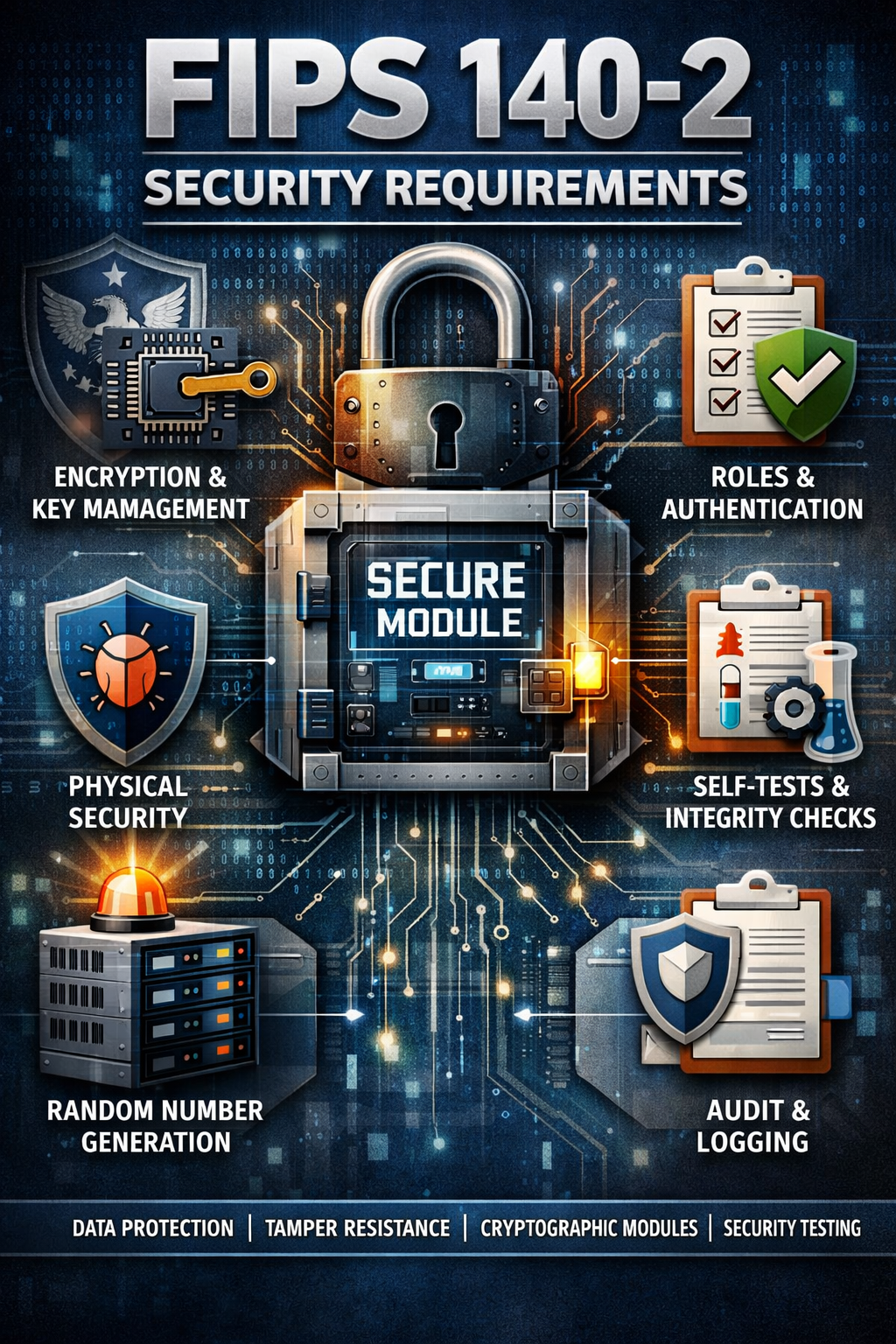
FIPS 140-2 Security Requirements: Complete Compliance Guide
Comprehensive guide to FIPS 140-2 cryptographic module validation, security levels, CMMC compliance, and FIPS 140-3 transition strategies.
NIST Cybersecurity Framework and PKI: A Practical Implementation Guide
The NIST CSF provides a structured approach to cybersecurity. Here's how PKI and certificate management map to each CSF function, and practical steps to align your cryptographic infrastructure with the framework.
NIS2 Directive and Cryptography: What EU Organizations Must Know
The EU's NIS2 Directive mandates cybersecurity measures for essential and important entities — including encryption and PKI. Here's what's required, who's affected, and how to prepare before the October 2024 deadline.
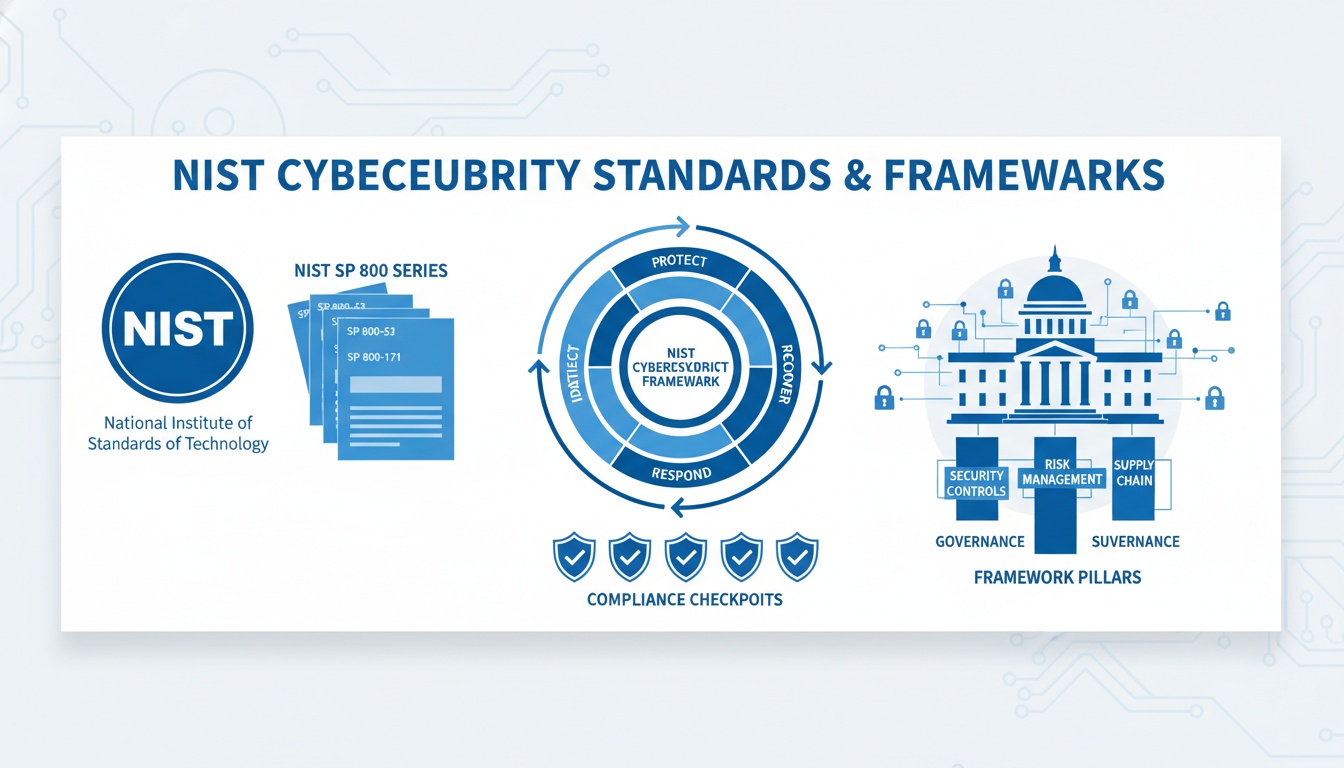
NIST Compliance Explained: A Simple, Clear 2025 Guide for Security & IT Teams
Understand what NIST is, why compliance matters, and how SP 800-53 and CSF improve security.
SOC 2 Cryptographic Controls: What Auditors Expect for Encryption and Key Management
SOC 2 audits examine your cryptographic controls under Common Criteria CC6 and CC7. Here's what auditors test, what evidence to prepare, and how to pass without findings on encryption and certificate management.
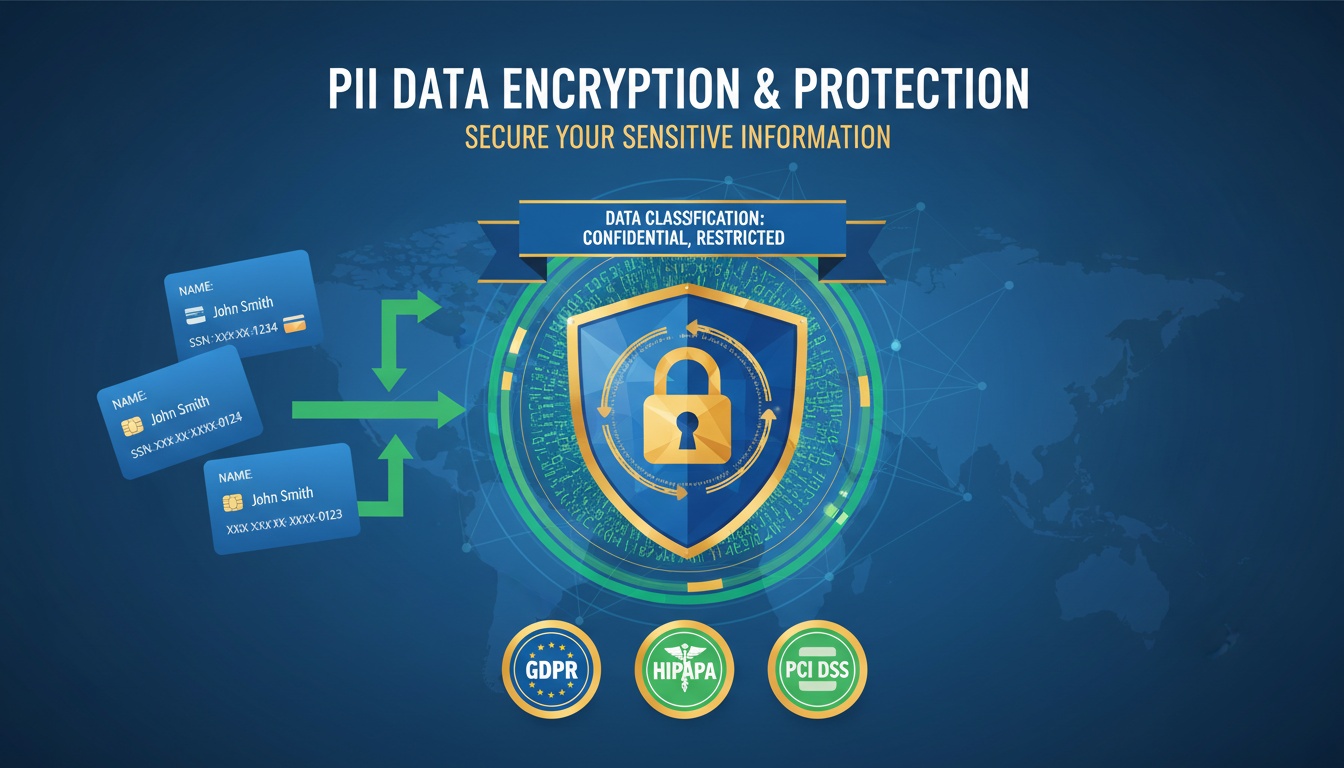
PII Data Encryption: How to Encrypt Personally Identifiable Information (2025)
Learn how to encrypt PII data with AES-256, implement encryption at rest and in transit, manage encryption keys, and meet GDPR, HIPAA, and PCI DSS compliance requirements.
What Is FIPS? The Hidden Cost of 'Good Enough' Crypto and Why Your Business Needs the Gold Standard
Learn what FIPS is, why FIPS 140-3 matters, how crypto validation works, and the real business risks of non-compliant encryption.
HIPAA Encryption Requirements: A Practical Guide for Healthcare IT
HIPAA requires encryption for protected health information but doesn't prescribe specific algorithms. Here's what 'addressable' actually means, which NIST standards to follow, and how to achieve safe harbor protection.
PKI for Financial Services: Certificate Management in Banking and BFSI
Financial services face unique PKI challenges: regulatory mandates, payment security, high-availability requirements, and massive certificate volumes. Here's how banks and financial institutions should approach PKI.
NIST SP 1800-16 Guidelines: The Enterprise Blueprint for TLS Certificate Management
A comprehensive guide to NIST SP 1800-16 guidelines for securing web transactions through automated TLS server certificate management.
Post-Quantum Cryptography Impact on BFSI and Government Sectors
Sector-specific analysis of post-quantum cryptography impact on banking, financial services, insurance, and government. Covers compliance drivers, migration priorities, and PQC readiness strategies.
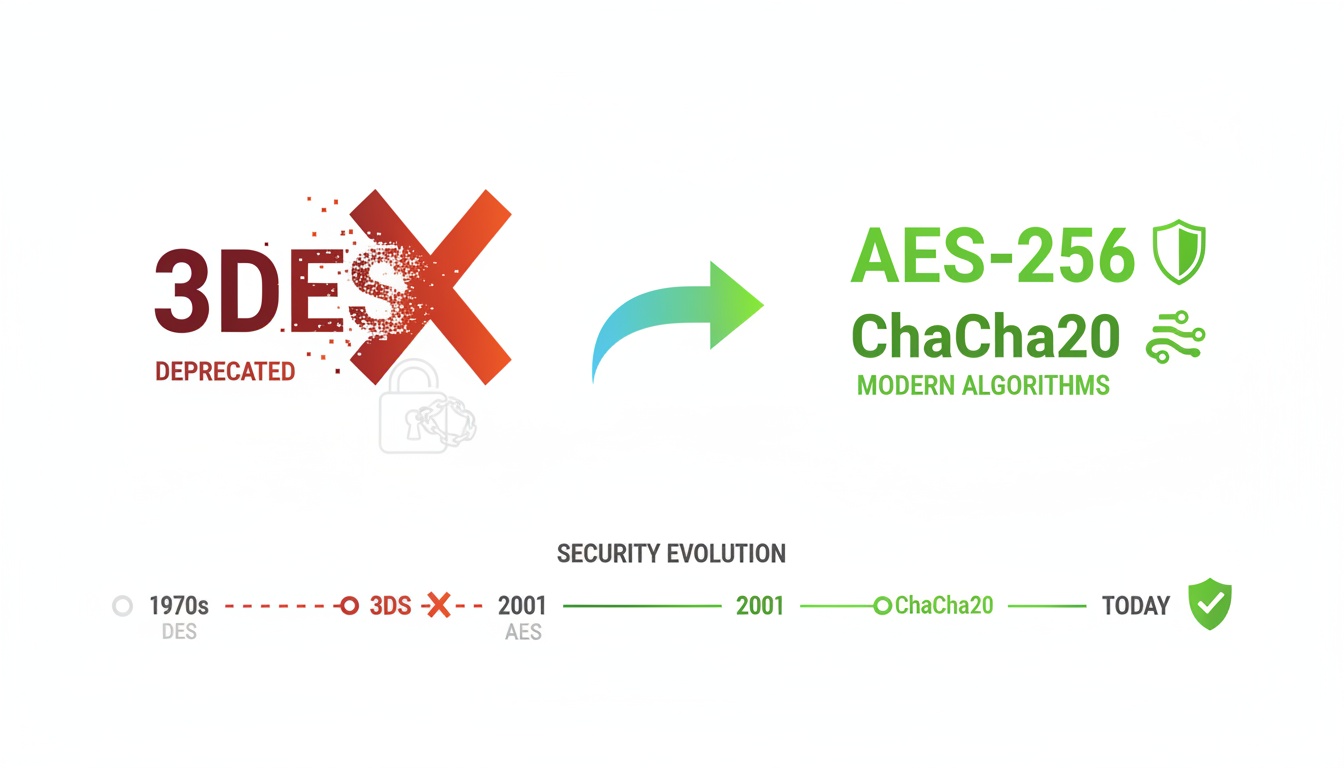
Why 3DES or Triple DES Is Officially Being Retired
Learn why 3DES (Triple DES) is being deprecated, the security weaknesses behind its retirement, and why AES is now the recommended encryption standard.
Regulatory Drivers for Cryptographic Inventory: CBOM and Compliance
CNSA 2.0, NIST SP 800-131A, and PCI DSS 4.0 are pushing organizations toward formal cryptographic asset inventories. CBOM provides the structured approach these frameworks demand.
CBOM (Cryptographic Bill of Materials): Why Every Enterprise Needs One
A CBOM inventories every cryptographic algorithm, key, certificate, and protocol in your infrastructure. Here's why it's essential for PQC migration, compliance, and incident response — and how to build one.
PCI DSS 4.0 Cryptography Requirements: What Changed and How to Comply
PCI DSS 4.0 introduced new cryptographic requirements including cipher suite inventory, certificate lifecycle documentation, and stronger key management. Here's what's new, what's mandatory by March 2025, and how to prepare.
Encryption vs Tokenization: When to Use Each for Data Protection
Encryption transforms data mathematically. Tokenization replaces it with a random substitute. Here's when each approach is better, how they affect PCI DSS scope, and why most organizations need both.
CNSA 2.0: Your Complete Guide to Quantum-Safe Cryptography
NSA's CNSA 2.0 mandates quantum-resistant algorithms for national security systems by 2030-2033. Here's what the requirements are, which algorithms to adopt, and how to plan your migration.
FIPS 140-3 Compliance: What Changed from 140-2 and How to Achieve It
FIPS 140-3 replaced 140-2 for cryptographic module validation. Here's what changed, what the security levels mean, and a practical guide to achieving FIPS compliance for your cryptographic infrastructure.
Key Management Best Practices for Enterprise: A Practical Guide
Cryptographic key management is where encryption succeeds or fails. Here's how to manage keys across cloud, on-premises, and hybrid environments — with practical patterns for generation, storage, rotation, and destruction.
47-Day TLS Certificates: How to Prepare for the New CA/B Forum Standard
The CA/Browser Forum voted to reduce maximum TLS certificate validity to 47 days by 2029. Here's the timeline, what it means for your infrastructure, and how to prepare before it's enforced.
SOX Compliance & Cryptography: IT Controls Every Public Company Needs
The Sarbanes-Oxley Act requires IT controls that protect financial data integrity. Here's exactly which cryptographic controls SOX demands — encryption, key management, certificate governance, and audit evidence your auditors expect.
Cryptographic Bill of Materials (CBOM): The Complete Guide for 2026
Everything you need to know about Cryptographic Bill of Materials (CBOM) — what it is, why it matters, how it differs from SBOM, the CycloneDX standard, discovery methods, quantum risk scoring, compliance frameworks, and implementation steps.
CBOM for Financial Services: Cryptographic Inventory and PQC Readiness for Banks
How financial institutions use Cryptographic Bill of Materials (CBOM) to meet PCI DSS 4.0 crypto requirements, protect payment keys, address HNDL exposure for transaction data, and plan post-quantum migration in alignment with SWIFT CSCF and regulatory expectations.
CBOM for Healthcare: Protecting Patient Data with Cryptographic Inventory and PQC
How healthcare organizations use Cryptographic Bill of Materials (CBOM) to meet HIPAA encryption requirements, protect PHI with long retention periods, address medical device cryptography, secure HL7/FHIR exchanges, and plan post-quantum migration for health systems.
The Audit That Exposed 3,000 Untracked Certificates
An ISO 27001 auditor asked for the certificate inventory. The team handed over 400 entries. Discovery found 3,200. Finding issued.
NIST PQC Standards: What Enterprise Teams Need to Do Now
NIST finalized ML-KEM, ML-DSA, and SLH-DSA in August 2024. Here is what enterprise teams must do now — starting with cryptographic inventory, not algorithm selection.
How Auditors Are Starting to Ask About Certificate Inventory
ISO 27001, SOC 2, and PCI DSS auditors increasingly ask: show me your certificate inventory. If yours covers 30% of actual certificates, that is an audit finding.
Deploying PQC Is Not the Same as Proving It Works: The Assurance Gap
The NIST post-quantum standards are final and organizations are deploying them. Almost nobody is measuring whether their PQC deployment actually does what they claim. Deployment is logistics. Assurance is governance.
The Cryptographic Governance Gap: Why an Inventory List Is Not Control
Everyone is racing to inventory their cryptography for post-quantum readiness. A list of assets is necessary but not sufficient. The harder question is whether you actually govern the controls around them.
Ready to Secure Your Enterprise?
Experience how our cryptographic solutions simplify, centralize, and automate identity management for your entire organization.