
Enterprise security
Explore all articles and insights related to Enterprise security.
Category Posts

AD CS Certificate Templates Explained: V1-V4, Configuration & Security Hardening
Understand AD CS certificate templates — versions V1 through V4, subject name handling, key usage, enrollment permissions, auto-enrollment, and how to prevent ESC1-ESC8 privilege escalation attacks through proper template configuration.
AD CS Complete Architecture Guide: Designing Enterprise Microsoft PKI
Design and deploy Microsoft Active Directory Certificate Services (AD CS) with proper hierarchy, role separation, template strategy, CRL distribution, and high availability. Covers 2-tier and 3-tier architectures for enterprise environments.
AD CS to Modern PKI Migration Playbook: Phase-by-Phase Enterprise Guide
Step-by-step migration playbook from legacy Microsoft AD CS to modern PKI with ACME, HashiCorp Vault, and cert-manager. Covers assessment, parallel operation, workload migration, rollback plans, and realistic timelines.
AWS KMS + HashiCorp Vault + HSM PKCS#11: Enterprise Key Management Integration Guide
Integrate AWS KMS, HashiCorp Vault, and hardware HSMs via PKCS#11 for enterprise key management. Covers architecture patterns, auto-unseal, transit encryption, PKI secrets engine, and FIPS-compliant key hierarchies.
Best Certificate Lifecycle Management (CLM) Platforms 2026: Multi-Vendor Comparison
Compare the top CLM platforms for 2026 — Venafi, Keyfactor, AppViewX, DigiCert, Sectigo, QCecuring, and open-source alternatives. Covers features, architecture, pricing tiers, and selection criteria for every organization size.
Best SSH Key Management Tools 2026: Enterprise Comparison
Compare the best SSH key management tools for enterprise — Teleport, QCecuring SSH KLM, HashiCorp Vault, StrongDM, CyberArk, and open-source alternatives. Covers certificate-based SSH, key rotation, session recording, and compliance.
Certificate Management Solutions for Hospitals & Healthcare Organizations
How hospitals manage SSL/TLS certificates across EHR systems, medical devices, patient portals, and telehealth platforms. Covers HIPAA encryption requirements, IoMT device identity, and CLM platform selection for healthcare.
Cloud-Based PKI Modernization: AWS Private CA, Google CAS & Azure Managed HSM
Modernize your PKI with cloud-native certificate authorities — AWS Private CA, Google Certificate Authority Service, and Azure-based PKI. Covers architecture patterns, cost analysis, hybrid deployment, and migration from on-premises CA.
EU Cyber Resilience Act (CRA) & PKI: What Product Manufacturers Must Know
Understand the EU Cyber Resilience Act's cryptographic requirements for products with digital elements. Covers secure-by-design mandates, firmware signing, device identity, vulnerability management, and PKI implications for manufacturers.
DORA Compliance & Cryptographic Controls: What Financial Entities Must Implement
Implement DORA (Digital Operational Resilience Act) cryptographic requirements for financial entities. Covers encryption standards, key management, ICT risk management, certificate lifecycle, and third-party oversight.
Enterprise PKI Modernization: From Legacy AD CS to Automated, Cloud-Ready Infrastructure
Modernize your enterprise PKI — migrate from legacy AD CS, adopt ACME automation, integrate cloud-native certificate management, and build crypto-agility for post-quantum readiness. Includes phased migration playbook.
KMIP Protocol Explained: Key Management Interoperability in Practice
Understand KMIP (Key Management Interoperability Protocol) — how it works, its operations, message structure, deployment architecture, and why it matters for enterprise key management and HSM integration.
ML-KEM (Kyber) Explained: The Post-Quantum Key Encapsulation Standard
Understand ML-KEM (formerly CRYSTALS-Kyber), NIST's FIPS 203 post-quantum key encapsulation mechanism. Covers how lattice-based cryptography works, parameter sets, performance benchmarks, hybrid TLS deployment, and migration timeline.
NIST SP 800-52 Rev 2: TLS Configuration Guidelines for Federal and Enterprise Systems
Implement NIST SP 800-52 Rev 2 TLS requirements — approved protocol versions, cipher suites, certificate requirements, and server/client configuration. Includes compliance mapping and practical Nginx/Apache configs.
NIST SP 800-57 Key Management Lifecycle: Crypto Periods, States & Implementation
Implement NIST SP 800-57 key management recommendations — crypto periods, key states, algorithm selection, key derivation, and operational lifecycle management. Includes practical mapping to AWS KMS, Vault, and enterprise key managers.
PKI Automation Platform: What It Is, Why You Need One & How to Choose
Understand what a PKI automation platform does — certificate discovery, lifecycle automation, policy enforcement, and multi-CA orchestration. Includes evaluation criteria, architecture patterns, and build-vs-buy analysis.
PKI Management Tools Comparison: Open Source vs Enterprise (2026)
Compare PKI management tools — EJBCA, Smallstep, Vault PKI, cert-manager, AD CS, and enterprise CLM platforms. Covers features, scalability, compliance, cost, and selection criteria for every organization size.
QCecuring vs DigiCert Software Trust Manager: Code Signing Compared (2026)
Compare QCecuring Code Signing vs DigiCert Software Trust Manager for enterprise code signing. Covers DigiCert's deprecation timeline, KeyLocker cloud HSM, CI/CD integration, pricing, and QCecuring's CA-agnostic policy-driven approach.
QCecuring vs Keyfactor SignServer: Enterprise Code Signing Compared (2026)
Compare QCecuring Code Signing vs Keyfactor SignServer for enterprise code signing. Covers SignServer's open-source model, Java-based architecture, on-premises deployment, PQ HSM support, and QCecuring's managed platform with policy engine and CLM integration.
QCecuring vs Teleport: SSH Access & Key Management Compared (2026)
Compare QCecuring SSH KLM vs Teleport for enterprise SSH management. Covers certificate-based vs key-based access, architecture differences, audit capabilities, Kubernetes integration, and when to choose each approach.
Small Business PKI Solutions: Practical Guide to Certificate Management at Scale
Compare PKI solutions for small businesses including Let's Encrypt, Smallstep, EJBCA, and managed services. Covers implementation roadmaps, cost analysis, and compliance for SMBs.
What Is MFA (Multi-Factor Authentication)? Complete Enterprise Guide
Learn what multi-factor authentication (MFA) is, how it works, types including TOTP, FIDO2, and certificate-based auth, NIST AAL levels, and enterprise deployment strategies.
Windows Hello for Business & Certificates: Deployment and PKI Integration
Complete guide to Windows Hello for Business certificate trust deployment, PKI integration with AD CS, TPM key attestation, hybrid models, and troubleshooting common enrollment issues.
Cryptographic Agility Implementation Guide: Building Systems Ready for Algorithm Change
A comprehensive guide to implementing cryptographic agility — architectural patterns, abstraction layers, algorithm negotiation, configuration-driven cryptography, implementation examples in Java, Go, and Python, testing strategies, and certificate management for crypto-agile systems.
Cryptographic Discovery Methods Compared: Finding Every Algorithm in Your Enterprise
Comprehensive comparison of cryptographic discovery methods — static code analysis, binary scanning, network traffic analysis, cloud API enumeration, configuration scanning, and runtime tracing (eBPF). Strengths, weaknesses, what each finds vs. misses, and how to combine them for complete visibility.
PQC Migration Roadmap: The Complete Enterprise Guide to Post-Quantum Cryptography Transition
A comprehensive 6-phase post-quantum cryptography migration roadmap for enterprises. Covers inventory, assessment, prioritization, planning, migration, and verification with realistic timelines, resource requirements, and common pitfalls.
PQC Readiness Assessment: The 50-Point Checklist for Post-Quantum Preparedness
A comprehensive 50-point checklist for assessing organizational readiness for post-quantum cryptography migration. Covers cryptographic inventory, algorithm classification, data sensitivity mapping, vendor assessment, hybrid testing, key management, compliance alignment, and training.
PQC Vendor Assessment Guide: How to Evaluate Vendors for Post-Quantum Readiness
Complete guide for evaluating vendor readiness for post-quantum cryptography. Includes qualification checklists, questions to ask about algorithm support, hybrid mode capability, FIPS validation timelines, key management, and performance impact.
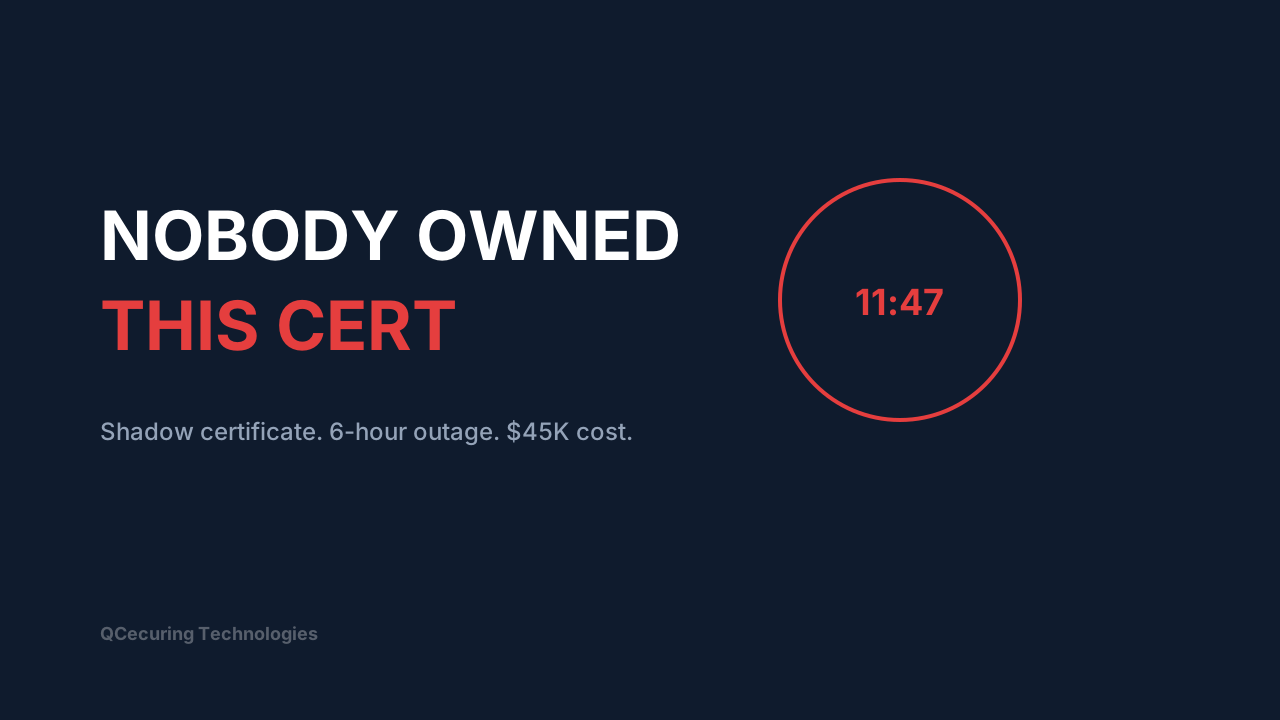
The Certificate Nobody Knew Existed (Until It Broke Production)
A forgotten certificate on a load balancer — imported by a contractor 2 years ago — expires at midnight. Three services go down. Nobody knows why for 6 hours.
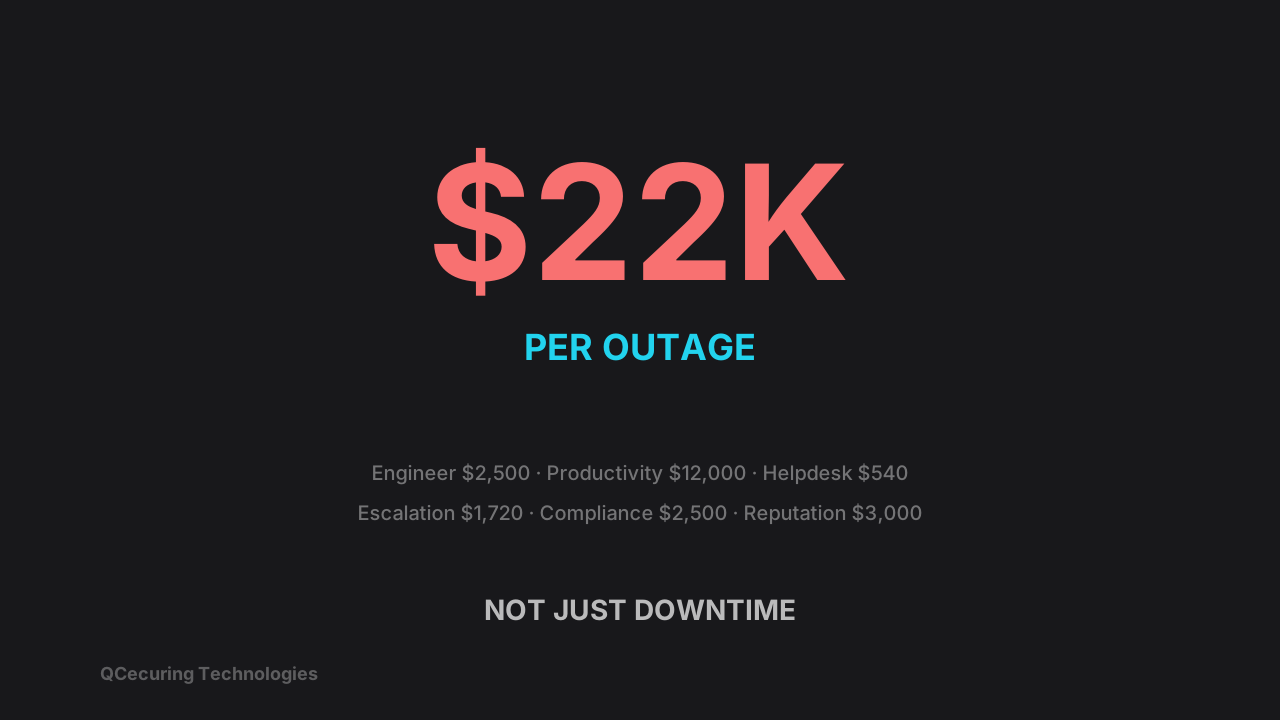
The Real Cost of a Certificate Outage (It's Not Just Downtime)
Certificate outages cost $22K per incident when you factor in engineer hours, lost productivity, helpdesk surge, and compliance findings. See the full cost breakdown.

Why 'We'll Know When It Breaks' Is Not a Certificate Strategy
Reactive certificate management costs 10x more than proactive. Compare MTTD, MTTR, and total cost between firefighting and planned maintenance approaches.
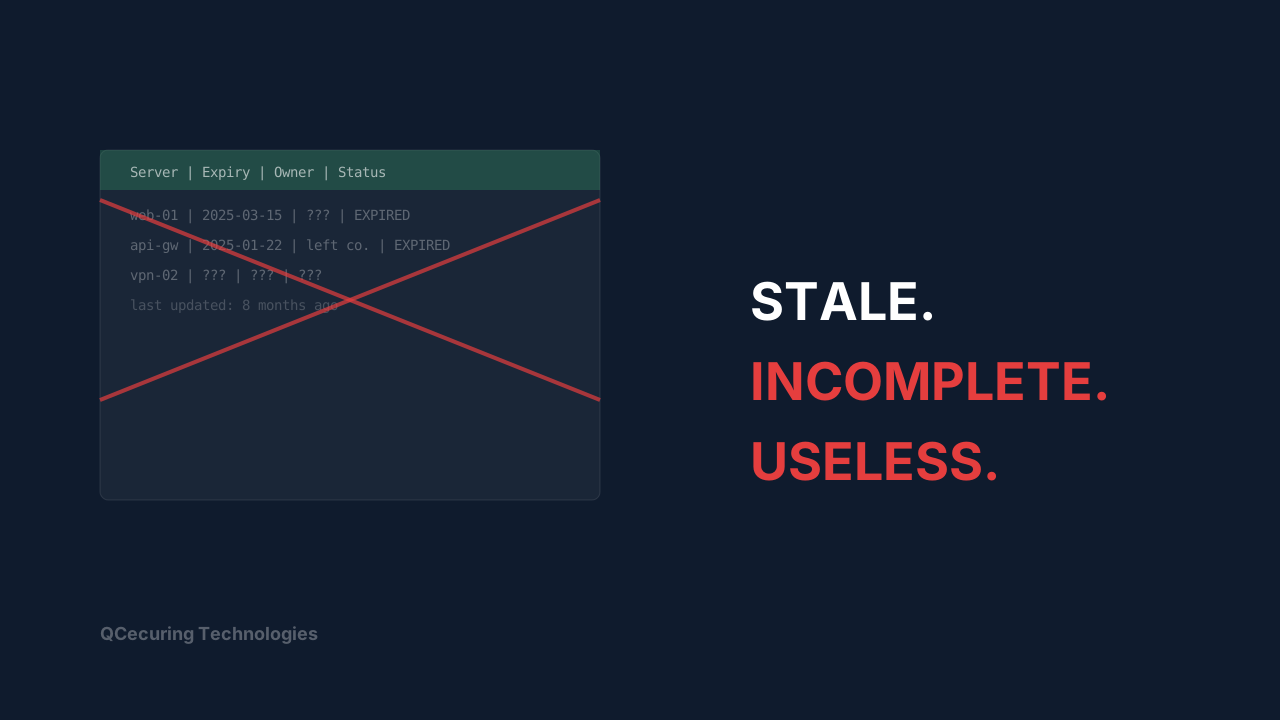
The Spreadsheet That's Supposed to Track Your Certificates
Why certificate tracking spreadsheets always fail. No alerts, no auto-discovery, stale data, single point of failure. Learn why spreadsheets can't manage certificates at scale.
Do You Actually Need a CLM Platform? (Honest Assessment)
Not every organization needs a CLM platform. An honest framework for deciding when scripts work, when they break, and when you need to invest.
Certificate Management Without Venafi Price Tag
Venafi costs 100K+ per year for Fortune 500. Mid-market teams need visibility and alerting, not enterprise complexity.
The 3 Questions Every IT Team Should Answer About Their Certificates
How many certificates do you have? When do they expire? Who owns them? If you cannot answer all three, you have a problem.
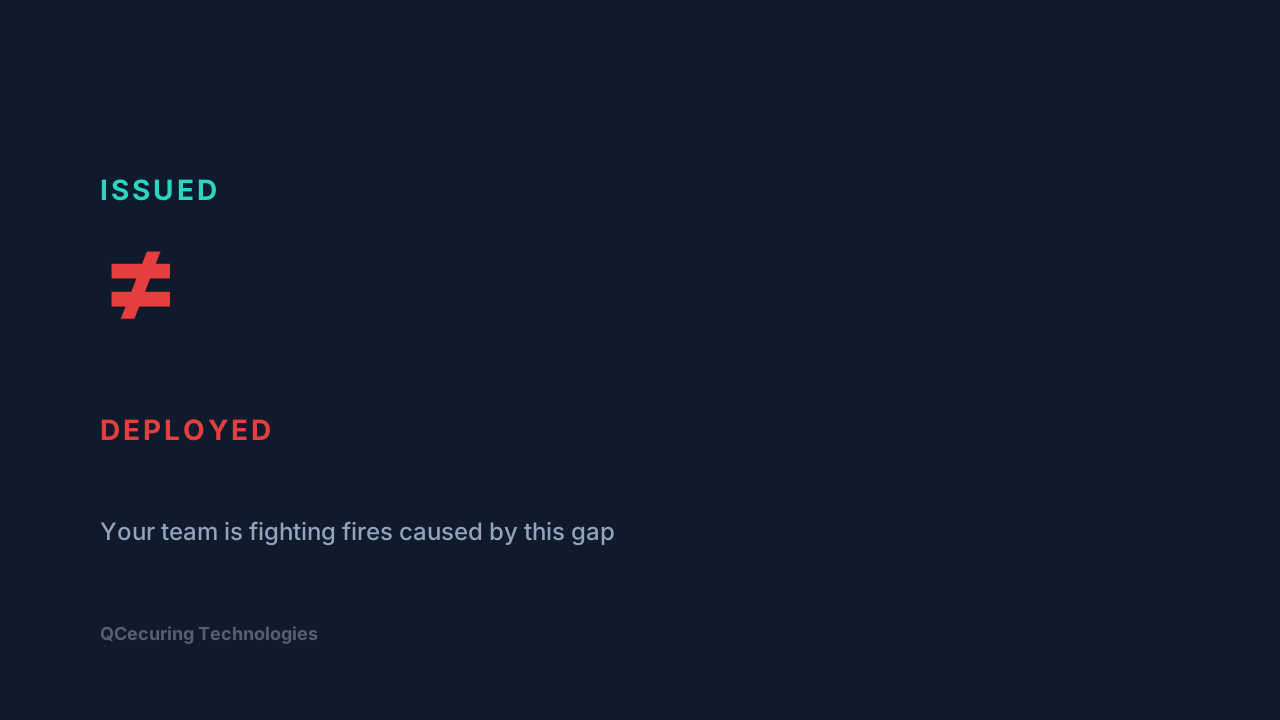
Your IT Team Is Fighting Fires Caused by Expired Certificates
Auto-enrollment issues and renews certificates. But your team is still getting woken up at 2 AM. The gap between issuance and deployment is where outages live.
Why Certificate Outages Will Get Worse in 2026-2027
Shorter lifespans, more microservices, hybrid cloud sprawl, same team sizes. The math does not work. Current processes will break.
Venafi vs. Keyfactor vs. Mid-Market CLM: What Do You Actually Need?
Feature comparison of enterprise CLM platforms. Most 500-person companies need 20% of what Venafi offers. Here is how to evaluate based on your actual requirements.
CLM vs. Spreadsheets vs. Scripts: The Real Trade-Offs
Spreadsheets work until 200 certificates. Scripts work until someone leaves. CLM works at scale. Here is the honest comparison with real failure points.
I Scanned a Company's Public Certificates — Here's What I Found
A live demonstration of scanning public certificates via Certificate Transparency logs, revealing expired certs, weak algorithms, shadow domains, and actionable remediation steps for enterprise security teams.
Live: Finding Expiring Certificates Across Subdomains
A technical walkthrough of subdomain enumeration combined with certificate scanning, using tools like subfinder, sslyze, and crt.sh to find expiring certificates before they cause outages.
What a Certificate Inventory Actually Looks Like (Before vs. After CLM)
A side-by-side comparison of messy spreadsheet-based certificate tracking versus clean CLM dashboard management, including data models, metrics, and practical migration steps.
Running a Certificate Risk Assessment: Step by Step
A complete methodology for running a certificate risk assessment, including scanning approaches, risk scoring frameworks, report templates, findings categorization, and remediation priorities.
When Exchange Stops Working: The Hidden Certificate Cause
Exchange and Outlook certificate dependencies, real outage scenarios, certificate services in Exchange (SMTP, IIS, POP), troubleshooting steps, and prevention strategies.
The Certificate That Expired on a Load Balancer (And Nobody Noticed for 3 Days)
A real-world story of an F5 load balancer certificate expiry that went undetected for 3 days due to partial failure mode, plus detection strategies and prevention methods.
How One Misconfigured Cert Template Broke Auto-Enrollment for 500 Devices
A deep dive into AD CS template misconfiguration that caused cascading auto-enrollment failure across 500 devices, including troubleshooting with certutil and a prevention checklist.
Certificate Lifecycle Management Explained in 5 Minutes
A clear, concise explainer of Certificate Lifecycle Management (CLM) — what it covers, who needs it, how it differs from just having a CA, and why it matters for enterprise security operations.
PKI for IT Teams: What You Actually Need to Know (No Crypto Theory)
A practical PKI explainer for IT operations teams — skip the math, focus on what breaks, how certs work in enterprise, CA hierarchy simplified, and what IT teams interact with daily.
How to Convince Your Manager You Need Certificate Visibility
Champion enablement content with talking points for budget approval, cost justification frameworks, risk framing, one-pager templates, and objection handling for certificate lifecycle management.
What a $0 Certificate Outage Prevention Strategy Looks Like
Free and open-source approaches to certificate monitoring using PowerShell scripts, certutil queries, cron jobs, and Prometheus exporters — when free is enough and when you've outgrown it.
Can Quantum Computers Break AES? What the Math Actually Says
Quantum computers threaten RSA and ECC, but AES is a different story. Here is what Grover's algorithm does to symmetric encryption, why AES-256 survives, and what to do about AES-128.
Ready to Secure Your Enterprise?
Experience how our cryptographic solutions simplify, centralize, and automate identity management for your entire organization.